What Campbell's Tells Us About Struggling Name Brands
Campbell's snack sales fell 12% last year while store brands hit record share. We look at why national brands are losing ground, what shoppers are reaching for instead, and where switching actually pays.

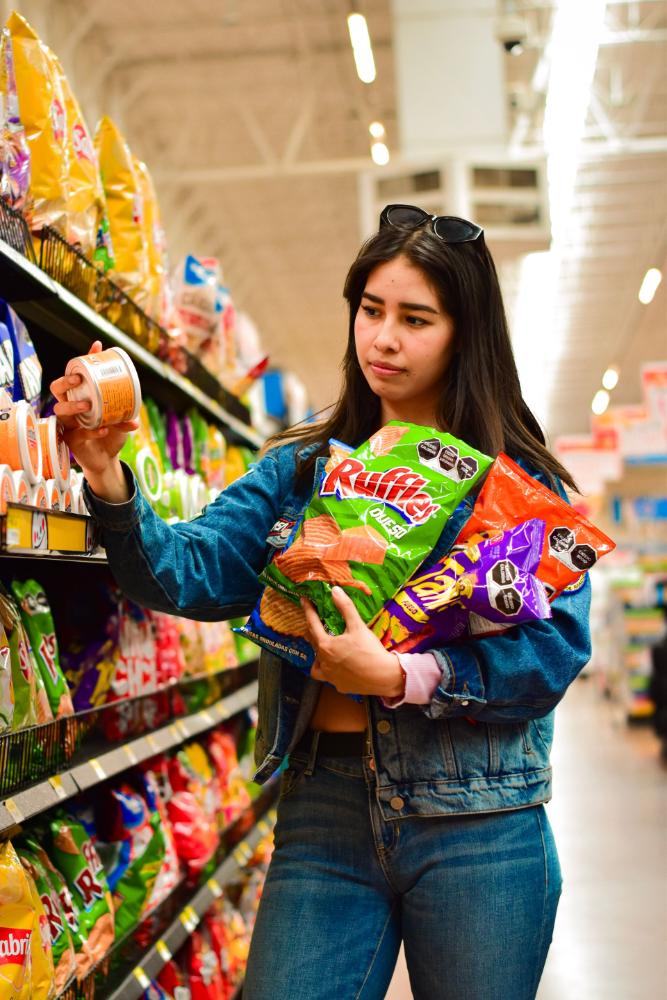
You've almost certainly performed this calculation yourself, and probably without much deliberation. You're standing in the cracker aisle. On the shelf before you sits a carton of Goldfish. Right beside it sit the store's own cheddar crackers, priced a dollar or more lower. For the better part of three decades, you may very well have reached for the name brand Goldfish and thought nothing further about it. In 2026, you and a great many other shoppers aren't reaching for it as readily. You're considering the cheaper alternative sitting right beside it. The cumulative effect of that hesitation is already plainly visible in the quarterly results of one of the oldest food manufacturers in the United States.
A Difficult Year for a 150-Year-Old Institution
In early September, The Campbell's Company closed a fiscal year, ended August 2, in which net sales declined 5% from the prior year. The fourth quarter was considerably worse: sales fell 8%, and a $145 million profit in the corresponding quarter a year earlier became a $69 million loss. Management characterized the performance as "unacceptable," and investors responded accordingly, sending shares down 6% on the announcement and leaving the stock roughly 15% lower on the year.
That 5% is measured in nominal dollars, which flatters it considerably. Campbell's spent the year raising prices rather than discounting to hold onto shoppers, so none of the decline can be explained away as cheaper products moving off the shelf. In the fourth quarter, organic sales fell 6%, effectively all of it from lower volume and mix, while price realization added a point. Set that against grocery inflation and the decline in real terms is steeper still. Fewer cans and cartons left the shelf, and the ones that did cost more than they used to.
The measures that followed indicate the severity of the situation more clearly than the earnings figures alone. Campbell's eliminated more than 1,750 positions, approximately 13% of its salaried workforce, through a combination of layoffs and voluntary early retirement. It closed two snack production facilities. It announced a $500 million cost reduction program extending through fiscal 2030. And it reduced its quarterly dividend from 39 cents to 25 cents, a 36% cut and the first reduction the company had made since 2001.
Firms in comfortable circumstances don't undertake such measures. Campbell's is communicating, in the manner available to a public company, that it doesn't anticipate a near-term recovery in consumer demand. Its own guidance for the coming year projects a further sales decline of 2% to 4%. Analysts had been forecasting approximately 1%.
The Snack Portfolio Accounts for Most of the Decline
The Campbell's name evokes the familiar red and white soup can, but the company also owns a substantial portion of the snack aisle. Goldfish crackers are Campbell's. So is the whole of the Pepperidge Farm line, Milano cookies and Chessmen and the fresh bread included, along with Cape Cod and Kettle Brand potato chips, Snyder's of Hanover pretzels, Lance sandwich crackers, and Snack Factory Pretzel Crisps. It is this division that accounts for the majority of the company's difficulties.
Snack sales declined 12% in the fourth quarter and 6% across the full year, falling to $3.82 billion, while operating earnings in the division dropped 28%. Salty snacks declined 7.8% at retail, with chips down 9.4%. Cape Cod and Kettle Brand absorbed a disproportionate share of that decline. Consumption of Pepperidge Farm's fresh bakery products fell 4.4%. The meals and beverages division, which includes soup, declined 4% - a poor result, but a considerably milder one than the snack figures.
This divergence becomes intelligible when considered from the perspective of the average shopper rather than the analyst. A family cannot forgo dinner, but it can readily forgo a bag of potato chips. When a grocery budget comes under pressure, the first items to leave the cart are those the household doesn't strictly require, and the second are the branded versions of those it does. Campbell's sells into both categories. Its snacks are the first thing to go and its soup is the second, which leaves remarkably little of the business out of the line of fire.
Price isn't the sole explanation, however, and it would be misleading to present it as one. Some portion of the decline in snack consumption reflects a genuine shift in dietary preference. Approximately 61% of consumers now report wanting snacks high in protein, and dollar sales of products containing twenty grams of protein or more have grown 19% year over year. A household that has reoriented its snacking toward protein isn't buying many boxes of crackers. Crackers, chips, and cookies are most of what Campbell's snack portfolio is, which makes it largely a junk food business. Junk food is the first thing to go when a household starts reading labels.
That trend is genuine, and there's little reason to expect it to reverse. It cannot, however, account for the whole of what Campbell's is experiencing. Were health consciousness the principal driver, one would expect households to be departing these categories altogether rather than migrating within them. What the data show instead is that private label unit share is rising while national brand units decline, which indicates that a substantial number of households haven't stopped purchasing cheddar crackers and potato chips at all. They have stopped paying a premium for the branded versions of them.
Six Years of Accumulated Food Inflation
These developments didn't arise without precedent. Grocery prices have risen approximately 32% since January 2020. A household that spent $500 monthly on food at that time now requires upwards of $620 for a comparable basket. Year-over-year food inflation has moderated to the range of 2% to 3%, which offers less relief than it might appear to, since a lower rate of increase doesn't reduce prices but merely slows their ascent from an elevated base. Wages have broadly kept pace in the aggregate, a fact of limited consolation to any particular household whose earnings have not.
One figure should concern Campbell's more than any single quarterly result: the gap between national brand pricing and store brand pricing has widened by 38% since 2019. National brands raised their prices more aggressively than the private label products beside them, and shoppers observed the difference. Across the average grocery category, national brands now command a substantial premium over their private label equivalents, and the typical store brand is priced 20% to 30% lower.
There's a tidy explanation on offer for all of this, which is that everybody's costs went up. It doesn't survive much scrutiny. The store brands sitting on the same shelf buy the same wheat, the same potatoes, the same oil, and the same freight and warehouse labor, and they absorbed the same inflation everyone else did. Had rising costs been the whole story, private label prices would have climbed at much the same rate and the gap between the two would have held roughly steady. Instead it widened by more than a third. What that gap measures isn't the cost of making food. It's how much more a national brand judged it could charge while shoppers were distracted by prices going up everywhere at once.
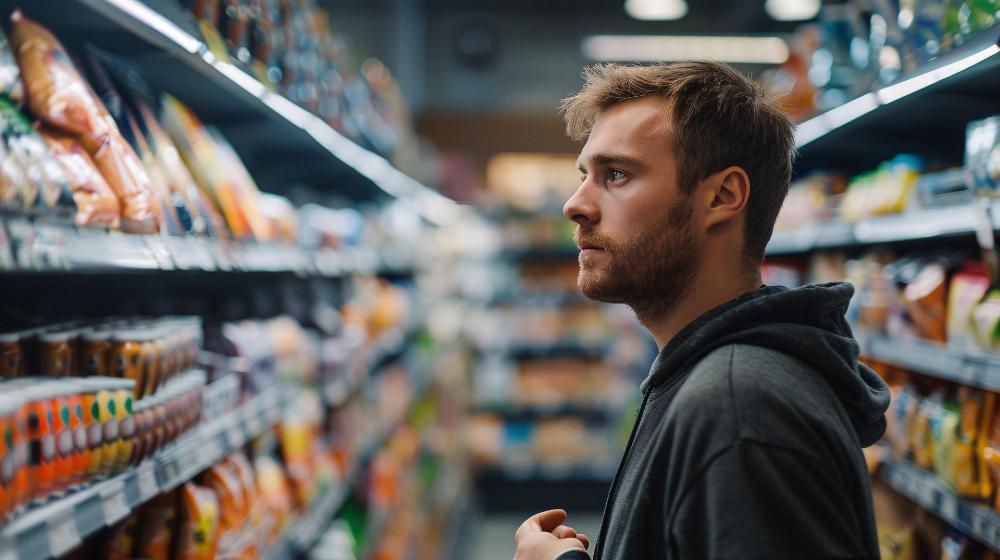
Campbell's response to declining sales has been to inform investors that it intends to raise prices on approximately 60% of its products.
The reasoning isn't difficult to follow. Input costs have risen materially, and the company has margins to defend. Yet from the vantage point of the aisle, it's difficult to see how increasing the price of goods that consumers have recently declined to purchase will persuade those consumers to return. The major fast food chains conducted essentially this experiment several years ago, with results that haven't encouraged imitation.
The Unique Injury Campbell's Did to Its Own Brand
Everything described so far applies broadly across packaged food. Competitors from Hormel to Kraft Heinz have reported the same pressure from shoppers trading down, and none of them can claim the trend is confined to their own shelves. Campbell's, however, spent this fiscal year carrying an additional burden that its rivals did not, and any honest account of why its sales fell as far as they did has to include it.
In late November 2025, a recording of a Campbell's executive talking about the company's own food began circulating widely. On it, Martin Bally, then a vice president and the company's chief information security officer, is heard describing Campbell's food in crude terms as "highly processed" and made for "poor people," and calling the chicken it contained "bioengineered meat." It surfaced as evidence in a wrongful termination lawsuit brought against the company by a former employee.
Campbell's never suggested the recording wasn't genuine. It called the comments "vulgar, offensive and false," apologized for the hurt they had caused, said the language didn't reflect the company's values, and Bally was gone within days. The lawsuit itself remains unresolved. None of it travelled anywhere near as far as the clip did. The recording ran on national television and across every major business outlet within forty-eight hours, and it landed in the middle of the fiscal year that produced the results described above.
Whether the remarks were fair, and whether Campbell's eventually prevails in court, is very nearly beside the point. The damage was done the moment shoppers heard the clip, because of what a national brand is actually selling. The soup isn't the product. The premium is the product, and brand equity is the only thing that has ever justified it. Store brands had already closed the quality gap and widened the price gap. Goodwill was very nearly the last thing holding the premium up. Then a recording surfaced in which one of the company's own executives described its food as something made for poor people.
And here is the part Campbell's would prefer nobody dwell on. Strip away the vulgarity, and the man wasn't wrong about the product. He was reading the label.
Turn a can around and read it. The sodium is enormous, the ingredient list runs long, and a good deal of what's on it exists to extend shelf life or manufacture flavor rather than to feed anybody. Campbell's promised back in 2015 to clean this up and take the MSG out. Read the panels today and the glutamates are still arriving, mostly by way of yeast extract. Campbell's concedes this on its own website, where it advertises nearly 600 varieties with no added MSG and then attaches an asterisk admitting those products do contain a small amount, occurring naturally in the yeast extract. The FDA's own guidance is blunt about this. Foods containing ingredients that carry free glutamate, with yeast extract named among them, cannot claim "No MSG" or "No added MSG" on their packaging.
None of which makes Campbell's unusual. That is rather the point. The store brand sitting beside it on the shelf is made much the same way, with the same preservatives, the same additives, the same manufactured flavor, and the same corners cut in the same places. Great Value has never pretended otherwise. It simply costs half as much. If you are going to buy processed food, and most of us do at least some of the time, the honest question is what that extra dollar is actually buying you.
So when a Campbell's executive was recorded describing the company's food as something made for poor people, the reason it resonated is that it confirmed what a great many shoppers already suspected every time they turned a can around. He said out loud what the ingredient panel had been saying quietly for years. The insult wasn't the revelation but the confirmation.
Earnings statements don't itemize contempt, and Campbell's will never publish a figure attributing lost sales to a single recording. But nobody is obliged to keep paying a premium to a company that thinks this little of the people buying from it. The fiscal 2026 results suggest a great many have stopped.
Private Label Has Outgrown Its Former Reputation
Store brands recorded an exceptional year. Private label sales in the United States reached $282.8 billion in 2025, and unit share climbed from 21.6% to a record 23.5% - approximately one of every four grocery items sold. Store brand dollar sales grew at nearly three times the rate of national brands. Through August of the current year, private label unit sales rose while national brand units declined. Ninety-nine percent of American households now purchase private label products.
The decisive change has been in quality. A substantial proportion of store brand goods is produced in the same facilities, on the same lines, and to comparable specifications as the branded equivalent, since retailers contract production to manufacturers who also fulfill national brand orders. We have put this to the test ourselves more than once, and the results rarely favor the name on the label. Retailers have meanwhile invested seriously in their own lines. Kroger's Private Selection, Aldi's Simply Nature, Target's Good & Gather, Walmart's Bettergoods, Sam's Club's Member's Mark, and Costco's Kirkland Signature bear little resemblance to the generic white-label products of the 1980s, and several are demonstrably superior to the branded goods shelved beside them.
Industry research consequently now documents a development that would have seemed improbable a decade ago: consumers increasingly select private label not because the national brand lies beyond their means, but because they prefer it.
Categories in Which Substitution Is Most Advantageous
Not every category rewards substitution equally, but most of them do, and the savings accumulate faster than people expect. These are the categories in which store brands most reliably hold their own:
- Pantry staples. Flour, sugar, rice, oats, dried beans, pasta, canned tomatoes and vegetables. There is essentially nothing separating the branded version from the store one, and these are the items a household buys week after week.
- Spices and seasonings. The markup on branded spices is among the steepest in the store, and what's inside the jar is the same dried plant either way.
- Dairy, eggs, and butter. Commodities with a label attached. Buy on price, or on the farm practices you care about, but not on the brand.
- Frozen fruit and vegetables. Frequently picked and frozen by the same processors, and out of season often better than what's sitting in the produce aisle.
- Broth and stock. Compare the ingredient panels directly. The formulations are usually close to identical, though a pot simmered from a carcass and some vegetable trimmings costs almost nothing and beats every carton on the shelf.
- Packaged snacks, if they're going in the cart anyway. Crackers, chips, and cookies come off the same contract lines as the branded versions. If a bag is coming home, there's no argument for it being the expensive one.
That last item deserves a caveat, because nothing here is an argument for filling a cart with processed food more cheaply. The best thing a household can do for its grocery budget and its health at the same time is to buy less of this category altogether and cook from actual ingredients instead. A pot of soup made from vegetables and a chicken carcass costs a fraction of what the cans do, keeps for days, and contains nothing anybody needs to look up. But packaged food does go in most carts, and when it does, paying a premium for it buys nothing whatsoever.
Campbell's has endured for 150 years and will in all likelihood endure considerably longer. Its own figures, however, establish one proposition with clarity: brand recognition alone no longer justifies a premium price to a household that is cutting back. That circumstance reflects less a failure of the company than a decision, arrived at independently by several million families, that the name printed on the box doesn't warrant the difference.
On your next visit to the snack aisle, spend a few seconds looking directly beside whatever you reached for. That is nearly always where the store's own version sits, wearing the supermarket's label instead of a national one, and it is where a fair portion of your grocery budget has been waiting.
Further reading:
Campbell's Reports Fourth Quarter Fiscal 2026 Results - The Campbell's Company
Campbell's cuts 13% of salaried workforce, closes plants as part of turnaround effort - Fox Business
Campbell's stock plunges as food maker slashes dividend - Yahoo Finance
U.S. Private Label Industry Reached $282.8 Billion in Sales in 2025 - Private Label Manufacturers Association
Price Gap Growing Between Private Label and National Brands - Numerator
Private label widens lead over national brands in 2026 grocery unit sales - FoodNavigator
Food Price Outlook - USDA Economic Research Service
Campbell's stands by product after exec accused of labeling it food for "poor people" - NBC News
4 Trends Shaping Sweets and Snacks in 2026 - BakeryAndSnacks
Soups Ingredients - The Campbell's Company
Questions and Answers on Monosodium Glutamate (MSG) - U.S. Food and Drug Administration
Campbell's Cream of Chicken Condensed Soup food score - Environmental Working Group
Campbell's To Remove Artificial Ingredients, MSG From Soups - Modern Farmer