Yellow Watermelon Isn't New: How Red Became the Watermelon You Know
Wild watermelons were pale white and bitter, and red is a later favorite chosen by farmers, so yellow watermelon is no novelty. Here is how watermelon got its colors, what yellow tastes like, and where to find one.

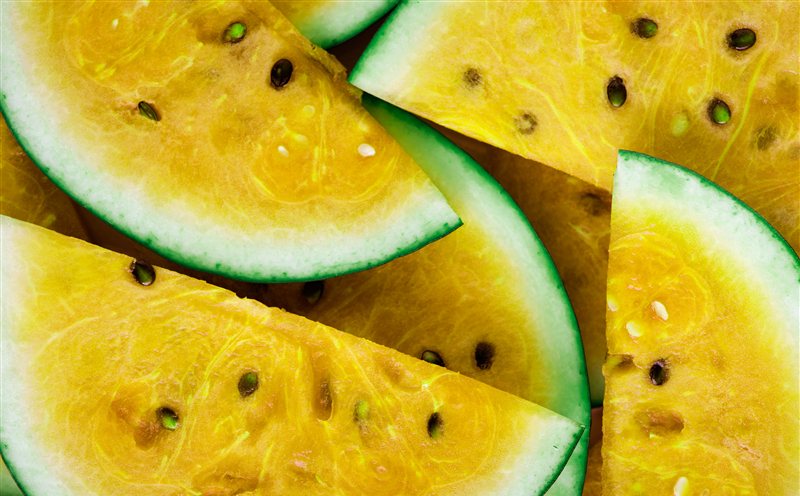
Slice open a yellow watermelon at a summer cookout and watch the double takes. Guests will ask whether it is a new hybrid, a GMO lab creation, or something that went wrong in the field. The surprise is understandable, but the story runs the other way. Yellow watermelon is not the newcomer. The wild relatives of watermelon have pale white flesh, and the bright red fruit we think of as normal is the result of farmers choosing a color change along the way. Here is where watermelon came from, why it is red, and why a yellow one deserves a spot in your cart.
Watermelon Started Out Pale White and Bitter
Watermelon is a native of Africa, and its closest known wild relative is the Kordofan melon of Sudan. A 2021 study in the Proceedings of the National Academy of Sciences found that Kordofan melons have nonbitter, whitish pulp and are the closest relatives of the domesticated watermelon, and may be a direct ancestor. Further back, the picture was less appetizing. Smithsonian Magazine reports that DNA from 6,000-year-old seeds found in Libya came from a wild watermelon with pulp that was probably sickeningly bitter, and researchers suspect people first grew the plant for its seeds rather than its flesh.
Watermelon later became something people wanted to eat in Egypt. Around 4,300 years ago, an artist painted a green-striped, oblong fruit on the wall of a tomb, and it sits next to grapes and other sweet fruits, which suggests the pulp was already worth eating by then. That mural had been published in 1912, but nobody recognized the fruit as watermelon until the 2021 research. About a thousand years later, around 3,300 years ago, Tutankhamun's tomb was stocked with eleven baskets of watermelon and jujube seeds, probably as a snack for the king's journey rather than seed to plant.
Where the Red Came From
The color of watermelon flesh comes from carotenoids, the same family of pigments that color carrots and tomatoes. According to a 2023 study in Frontiers in Plant Science, red flesh is rich in lycopene, which makes up roughly 70 to 90 percent of its carotenoids. Yellow flesh is high in a group of pigments called xanthophylls, orange flesh has more beta-carotene, and white flesh has almost no pigment at all.
The 2021 research team attributes the red color of modern watermelons to lycopene buildup that was likely shaped by farmers over many generations. Researchers call that artificial selection, but it simply means growers picking the reddest, sweetest fruit, saving its seeds, and planting them again, the same way gardeners have always saved seed from their best plants. The 2023 study goes a step further and proposes that orange flesh is a traditional landrace type and that red flesh arose from it during domestication, after a small change in a single gene. Scientists present that as a leading hypothesis rather than a settled fact, so the precise order of colors is still being worked out. What the evidence does show is that red was not the starting point.
One note on a popular version of the story: red watermelons are not clones. Farmers kept the fruit they liked best, replanted its seeds, and repeated that over many generations, which is how the red type became the standard.
So Is Yellow Watermelon the Original?
It is closer to the truth than the idea that yellow is a novelty. The wild ancestors were pale white, orange-fleshed types appear to be traditional landraces, and the red one is the later favorite. To be precise, the original was whitish rather than bright yellow, and today's golden varieties are cultivated types, not a wild throwback. But a yellow slice is part of watermelon's long history, and it is a good reminder that the color in the store aisle is a choice, not a law of nature.
What Yellow Watermelon Tastes Like
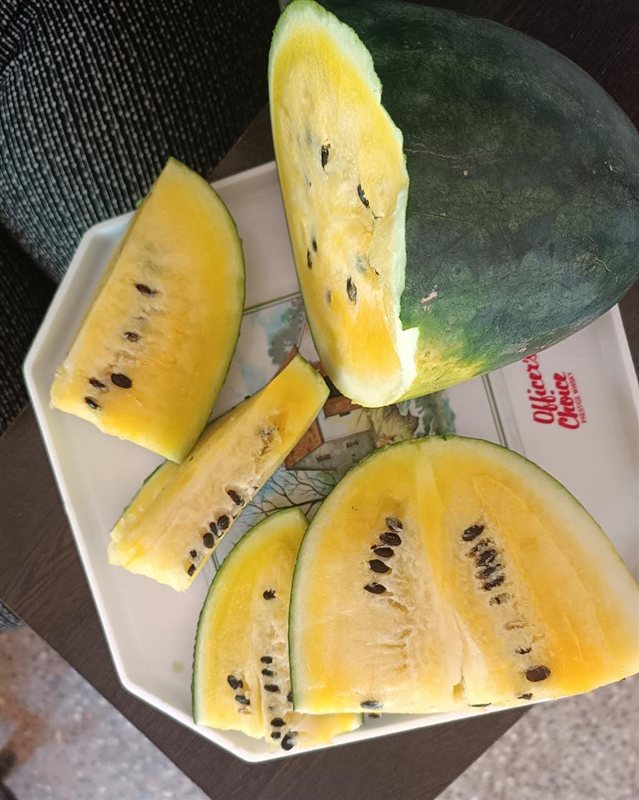
Seed catalogs describe the flavor as sweet, with honey and apricot notes, and softer and more mellow than red. Popular varieties include Yellow Crimson, a classic round melon with bright yellow flesh, and Yellow Doll, a smaller, earlier-ripening type with crisp, juicy flesh.
- Chilled wedgesthe easiest way to show off the color
- Cubes in a fruit saladgolden chunks look great next to berries and kiwi
- Melon ballsscoop red and yellow together for a two-tone bowl
- Salad with mint and fetathe mild sweetness works with salty cheese and fresh herbs
- Blended into a cold drinkpour over ice with a squeeze of lime
Where to Find One
Look for yellow watermelon at farmers markets and in the produce section in summer, often as a smaller round melon sold next to the red ones. If you garden, seed catalogs such as Reimer Seeds carry several yellow-fleshed varieties, and growing your own is one of the cheapest ways to enjoy a melon your neighbors have not tried. The guide to the easiest vegetables to grow at home is a good place to start if you are new to the garden.
Try the Yellow One This Summer
Watermelon has been a sweet summer favorite for thousands of years, and it did not start out red. The next time a golden melon turns up at the market, grab it. You get a juicy, honey-sweet slice and a conversation starter, and you can tell your guests they are tasting something closer to the watermelon's roots than the red one on the other side of the table.
Header photo by George Chernilevsky (CC BY 4.0), slices photo by Nicole Cuncolim (CC0), and wedges photo by Rawpixel (CC BY 2.0), all via Wikimedia Commons.