Why Some Aldi Stores in the South Look So Different
Why do some Aldi stores in Florida and the Southeast look so different? Many moved into former Winn-Dixie buildings after Aldi bought the chain.

An Aldi in a former Winn-Dixie building in Key Largo, Florida.
If you shop in Florida or elsewhere in the Southeast, you may have pulled into a familiar old shopping center and found an Aldi sign where the Winn-Dixie logo used to be. The entrance sits in the middle of a long storefront, the carts are waiting inside, and the whole thing feels different from the newly built Aldi stores you may know. You are not imagining it. Aldi bought Winn-Dixie's parent company in 2024, turned some of its stores into Aldis, and sold the rest to a new owner, who still runs them as Winn-Dixie. Here is how that happened, and why these converted Aldi stores look a little unusual.
Why Do Some Aldi Stores Look Different?
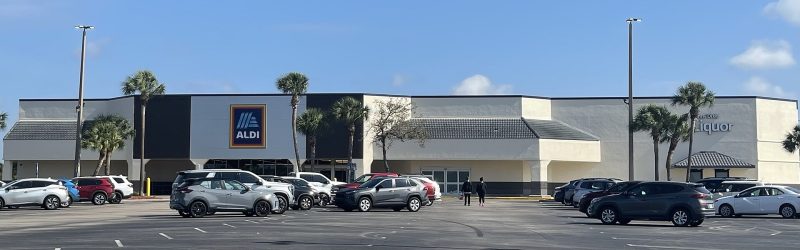
Some Aldi stores look different because they moved into buildings that used to be Winn-Dixie and Harveys supermarkets. Aldi completed its purchase of Southeastern Grocers, the Jacksonville company behind Winn-Dixie and Harveys Supermarket, on March 7, 2024, according to the Jacksonville Daily Record. The deal covered about 400 stores in Florida, Georgia, Alabama, Louisiana, and Mississippi. Instead of tearing those buildings down, Aldi has been converting many of them, keeping the old shell and putting its own store inside.
How Did Aldi End Up With Winn-Dixie?
Aldi's Winn-Dixie story took several turns in just a few years. The timeline below draws on the Jacksonville Daily Record and Grocery Dive.
- August 2023Aldi agrees to buy Southeastern Grocers
- March 2024the deal closes, with about 400 stores
- February 2025Aldi sells about 170 stores and the company back to a new owner group
- Through 2027Aldi converts about 220 stores to its own format
Aldi kept the stores it wanted and let the rest go. Grocery Dive reports that in February 2025, Aldi sold Southeastern Grocers, about 170 Winn-Dixie and Harveys stores, and the Winn-Dixie liquor stores to a group led by Southeastern Grocers chief executive Anthony Hucker and C&S Wholesale Grocers. Aldi held on to about 220 stores to convert by the end of 2027, a plan the company described as a "focused conversion portfolio" in the Southeast.
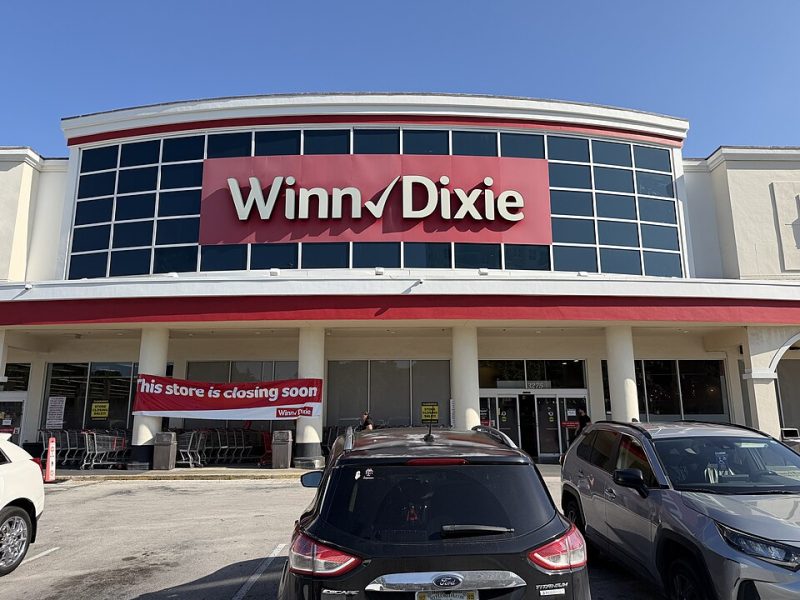
Plenty of Winn-Dixie stores are still open, especially in Florida. Grocery Dive reports that Southeastern Grocers retired its old name in January 2026 and became The Winn-Dixie Company, with a focus on Florida. So in some towns, a Winn-Dixie and a former Winn-Dixie turned Aldi may sit just a few miles apart.
Does a Converted Aldi Use the Whole Building?
A converted Aldi may use only part of the old building, because Aldi stores are usually smaller than many of the supermarkets they replaced. Grocery Dive put a typical Aldi at about 22,000 square feet, and it noted that Southeastern Grocers' own filing showed Winn-Dixie stores averaging about 48,000 square feet and Harveys stores just over 36,000. Sizes vary from store to store, but in many cases Aldi takes a section of the old supermarket and builds its own entrance into the existing storefront, leaving the rest for another tenant.
Local reports show the same split again and again. The Jacksonville Daily Record reported plans to turn a 46,189-square-foot Harveys in Jacksonville into a 21,839-square-foot Aldi. NorthEscambia.com reported that the Aldi on Nine Mile Road near Pensacola uses about 20,000 square feet of the old Winn-Dixie, leaving empty space next door. In Tampa's Hyde Park, Creative Loafing Tampa Bay said the new Aldi is about half the size of the original store, with room left for another retailer.
How Is a Converted Aldi Different From a New One?
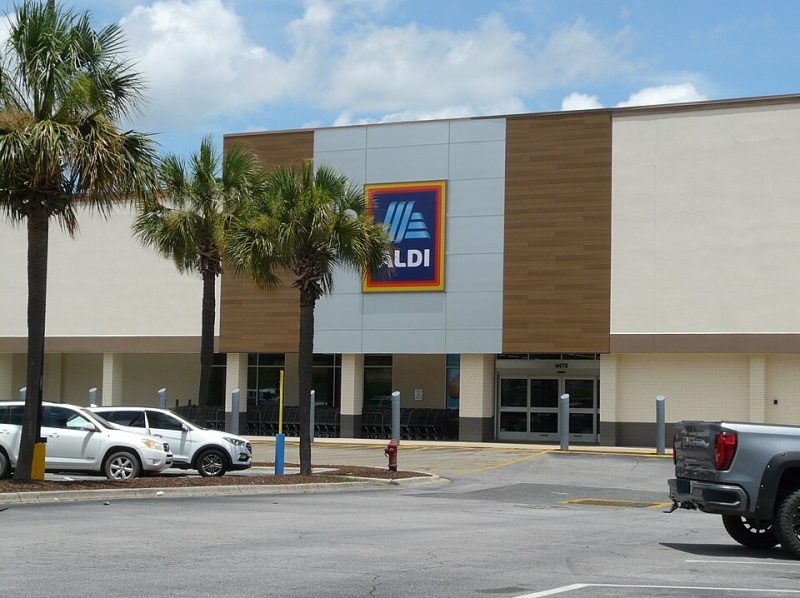
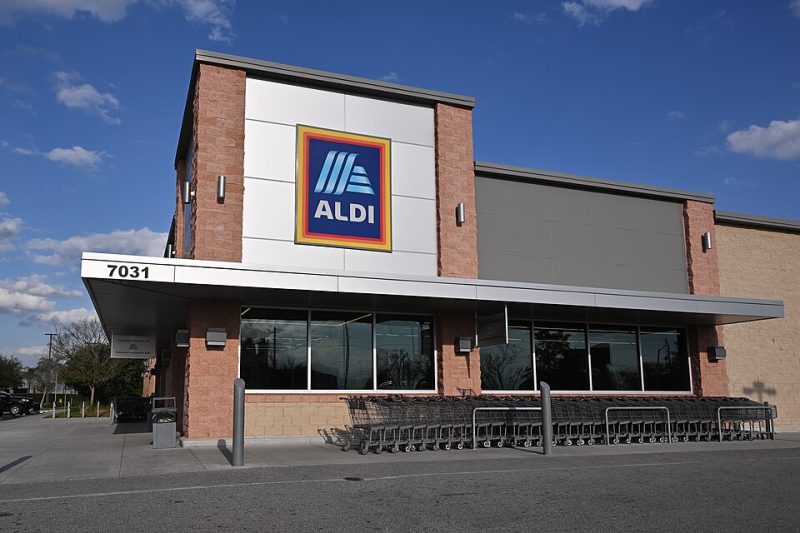
A converted Aldi is easy to spot once you know what to look for. Many newly built Aldi stores are compact, stand-alone buildings with the entrance at a front corner and a covered row of carts right outside the door, like the Orlando store below. The Key Largo Aldi at the top of this page works with what the old supermarket left behind instead. Its entrance sits partway down a long storefront under a canopy that runs the length of the building, and the carts are kept inside. The gray panels and the tall Aldi sign are the main clues that a new tenant moved in.
What Changes When a Winn-Dixie Becomes an Aldi?
Inside, a converted store works like any other Aldi, and that can surprise longtime Winn-Dixie shoppers. This side-by-side draws on the USA TODAY Network in Florida, the Jacksonville Daily Record, and NorthEscambia.com.
The Aldi way of shopping is part of how the chain keeps prices low. Heather Moore, a regional Aldi vice president, told NorthEscambia.com that the quarter carts and bring-your-own bags help bring costs down. For more on how Aldi works, read about the two German brothers behind Aldi and Trader Joe's, why Aldi is putting its name on its store brand labels, and how to put together an Aldi Thanksgiving dinner for 10 under $39.
Spot the Former Winn-Dixie in Your New Aldi
If your neighborhood Aldi has its door in the middle of a long storefront and its carts parked inside, there is a good chance a Winn-Dixie or Harveys came first. The building may be borrowed, but the shopping is pure Aldi. Grab a quarter and a bag, and enjoy a familiar spot with a new kind of grocery store inside.
Header photo of the Key Largo Aldi by Cheap Simple Living. Englewood photo by PCHS Pirate Alumnus (CC BY 4.0), Miami photo by Phillip Pessar (CC BY 4.0), Marianna photo by The Bushranger (CC BY-SA 4.0), and Orlando photo by G. Edward Johnson (CC BY 4.0), all via Wikimedia Commons.