American Beautyberry: The Native Shrub Behind an Old Mosquito Remedy
American beautyberry feeds birds, makes a showy native shrub, and was once rubbed on mules to repel bugs. Here is what USDA scientists found and what the folk traditions say.
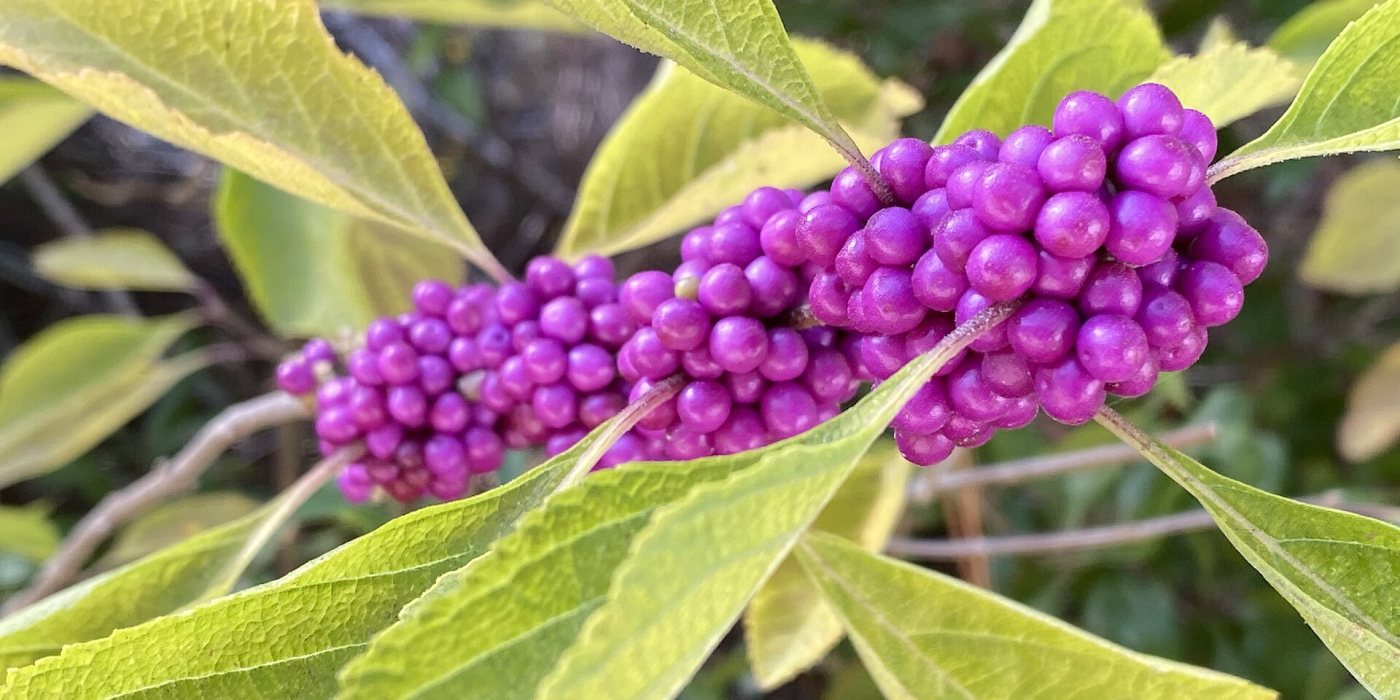
Sometime in late summer, a shrub in the Southeast does something that stops people in their tracks. Its branches fill up with tight clusters of bright purple berries, so shiny and so perfectly round that they look like someone strung jewels along the stems. That shrub is American beautyberry, and it is not just a pretty face. Birds feast on it, farmers once rubbed its leaves on their mules to keep bugs away, and government scientists later wondered whether those farmers were onto something. Here is the story.
A Native Shrub Too Pretty to Be Wild
American beautyberry (Callicarpa americana) is native to the central and southeastern United States, according to North Carolina State Extension, where it grows in open meadows, thickets, woodlands, and along ponds and streams. It also goes by American mulberry, French mulberry, and sour-bush. The shrub grows 3 to 8 feet tall, bears small pink to blue flowers in June and July, and then produces its famous purple berries from August through October, often lasting into early winter. Gardeners can also find white-berried and pink-berried varieties. It is hardy in zones 6 through 10, grows in full sun or part shade, and puts up with many soils as long as the drainage is good.
- Native range, county records
- Listed for the state, no county detail
USDA PLANTS lists American beautyberry as native to the lower 48. This is a documented range, not a guarantee that you will find it growing in your area. Data: USDA PLANTS. Basemap: OpenFreeMap, © OpenStreetMap contributors.

A Feast for Birds and Other Wildlife
Beautyberry earns its place in a bird-friendly yard. NC State lists American robins, brown thrashers, purple finches, and eastern towhees among the songbirds that eat the berries, and squirrels, raccoons, foxes, and opossums eat them too. Birds spread the seeds, which is why Mississippi State Extension notes that volunteer plants pop up in random spots. If you want to see which of these birds live near you, look them up on the American Bird Atlas, including the American robin, brown thrasher, purple finch, and eastern towhee. For more ways to bring birds to your yard, see our post on attracting birds on a budget.
The Old Mississippi Mosquito Remedy
The most famous part of the beautyberry story comes from Mississippi. According to the USDA Agricultural Research Service, botanist Charles Bryson passed along a tip from his grandfather, that people in northeastern Mississippi once used beautyberry to protect themselves and their farm animals from biting bugs. Farmers crushed the leaves and tucked them under the harnesses of horses and mules. In 2006, ARS chemist Charles Cantrell and his colleagues in Oxford, Mississippi, isolated compounds from the plant that let the crushed leaves repel mosquitoes. Follow-up tests by ARS scientists in Maryland found that two of the compounds, callicarpenal and intermedeol, also repelled blacklegged ticks, the kind that carry Lyme disease. In the lab, strips treated with the compounds repelled more than 95 percent of the tick nymphs at doses where the common repellent DEET does the same.

The ARS describes those findings as preliminary, so this is a story about a folk remedy that earned a second look, not a reason to ditch your bug spray. Mississippi State Extension also cautions that rubbing the leaves on bare skin could cause an allergic rash for some people. A beautyberry shrub near the patio is a lovely idea, but for real protection from mosquitoes and ticks, stick with a repellent proven to work.
A Plant in the Traditional Medicine Cabinet
Beautyberry has a place in traditional plant medicine as well. NC State notes that Native Americans historically used the roots, leaves, and branches as medicine, and the University of Alabama Arboretum says the roots are used to make an herbal tea. We could not find clinical studies that test beautyberry as a remedy for people, so these traditions are best enjoyed as history, in the same spirit as our posts on mullein and stinging nettle.
What About Beautyberry Jelly?
Yes, people make jelly from the berries, and it comes out a pretty light purple. The berries are edible, but they are not known for their flavor. NC State calls them mild, and the University of Alabama Arboretum says humans can eat them only in small quantities because they are astringent. Mississippi State Extension points out that you can find plenty of recipes online but that the author has not tried one. If you try it, use a recipe from a tested canning source, such as the National Center for Home Food Preservation, and enjoy it as a fun novelty rather than a staple.
A Beautiful Shrub Worth Planting
American beautyberry is a rare plant that checks every box. It is native, it is easy to grow, it feeds the birds, and in the fall it puts on one of the best color shows in the garden. Prune it back hard in late winter, since the flowers and berries form on new growth, and then sit back and watch the robins show up. Whether or not it ever repels a single mosquito, it is a shrub with a story worth telling.
Photos via Wikimedia Commons: header by vastateparksstaff, source, CC BY 2.0, cropped and resized. Berry closeup by Awcoburn, source, CC0, resized. Pink berries by Bob Peterson, source, CC BY-SA 2.0, resized.