Mullein: The Roadside Weed Behind a Centuries-Old Herbal Tea
Mullein grows wild along roadsides and has been used for coughs since ancient times. Here is its history, what research says, and how to use it safely.
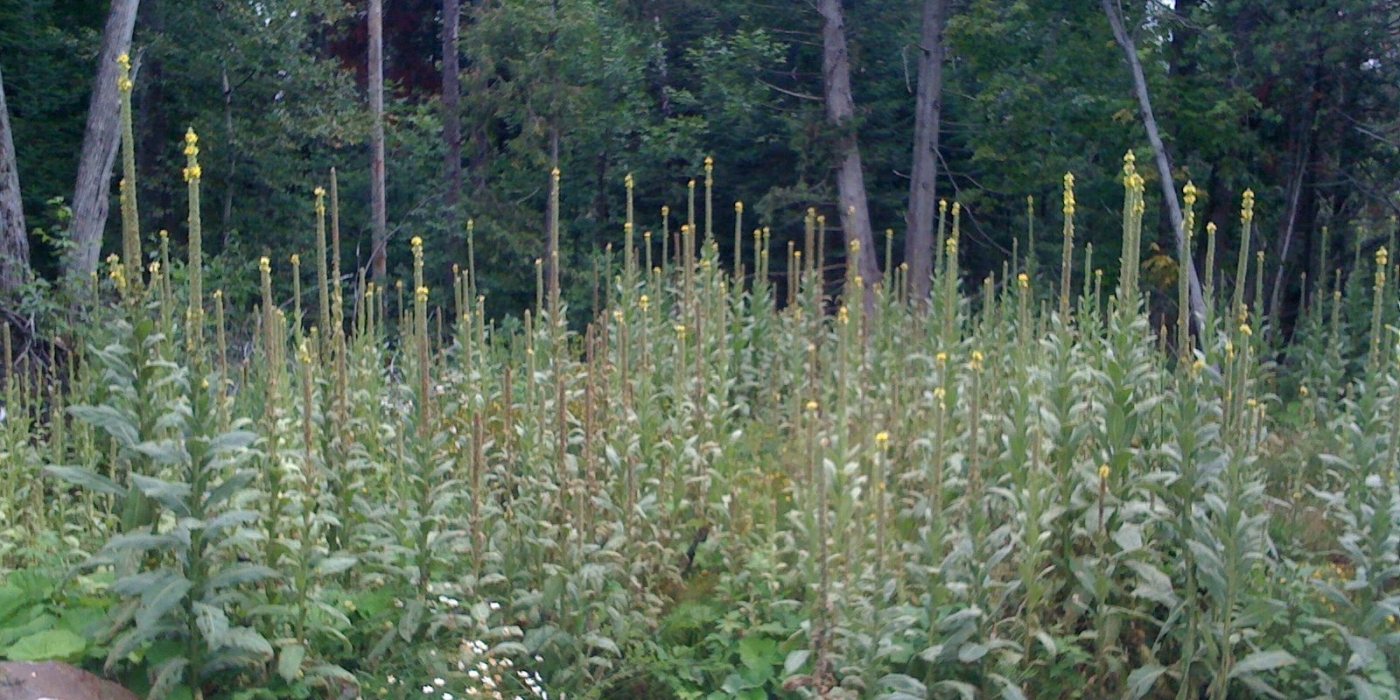
Drive down almost any country road in summer and you may spot a tall, fuzzy stalk topped with small yellow flowers, standing alone at the edge of a field. That is mullein, and for centuries it has been valued as a remedy for coughs. Today it is sold as tea in health food stores and online. Like the dandelion, it is a plant most people walk past that has a long history as a remedy. Here is the story behind the plant, and what to know before you try it.
A Two-Year Plant With Velvety Leaves
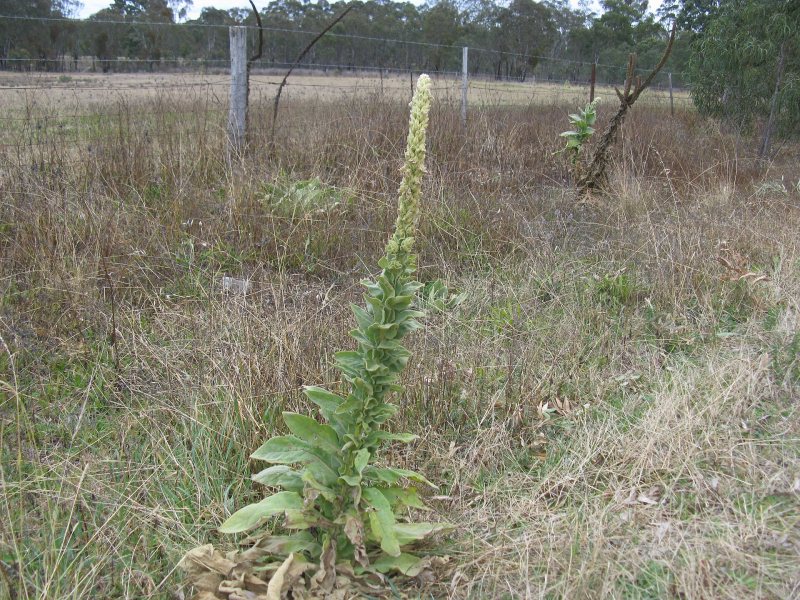
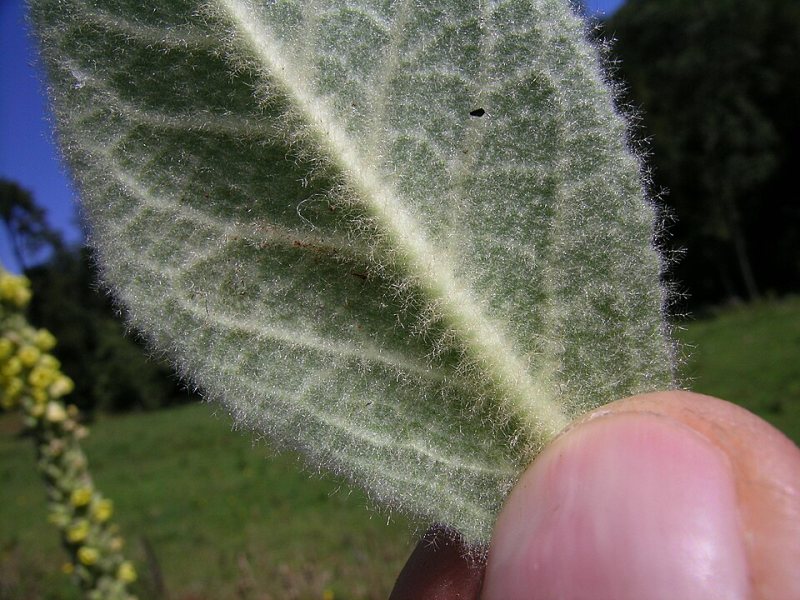
Common mullein (Verbascum thapsus) is a biennial. According to North Carolina State Extension, it spends its first year as a low rosette of large, silvery-green leaves covered in woolly hairs. In its second year, it sends up a flower stalk that can reach 6 to 10 feet, bears fragrant yellow flowers from June through September, and then dies. The plant is native to Europe and Asia and has naturalized across the United States and Canada, where it grows in fields, pastures, and along roadsides. Bees, butterflies, and other pollinators visit its flowers. It can crowd out native plants, and it is listed as a noxious weed in Colorado and Hawaii.
- Introduced and naturalized, county records
- Listed for the state, no county detail
USDA PLANTS lists common mullein as introduced to the lower 48. This is a documented range, not a guarantee that you will find it growing in your area. Data: USDA PLANTS. Basemap: OpenFreeMap, © OpenStreetMap contributors.
An Old Plant With Many Names
Mullein has been part of European life since ancient times. A 2025 study in the journal Plants that traced the plant through art and history notes that Pliny the Elder described mullein in the first century, and that its stems were used as torches at Roman funerals and ceremonies. Its ancient Greek name, phlomos, is linked to the word for flame, and several old German names mean "candle" or "candle herb." The English name comes from Middle English and Old French words rooted in the Latin for "soft," which is a fitting description for the leaves. The study also describes European folk customs, such as gathering the plant around the feast day of St. John the Baptist and passing it through bonfires to ward off evil spirits.
A Traditional Herb for Coughs and Breathing Trouble
Across Europe, mullein has been a beloved herb for coughs, hoarseness, and bronchitis for centuries. The same 2025 study describes the leaves and flowers as a traditional soother for the airways. Before antibiotics, the Cleveland Clinic notes, mullein was a go-to herbal remedy for illnesses as serious as whooping cough, pneumonia, and tuberculosis. Today it is a favorite for sore throats and a staple of herbal shops, where it is sold mainly as tea.
Herbalist Jethro Kloss, author of Back to Eden, a 1939 handbook of natural remedies (paperback | Kindle), was a big fan. He called mullein "one of the old household herbs we have used from childhood." He recommended a tea of the leaves for asthma, croup, bronchitis, and difficult breathing, a gargle for sore throat, and a tea of the flowers for sleep. Like many herbalists of his day, he treated mullein as an everyday household remedy, a sign of how trusted the plant was before modern medicine.
Does It Work? What the Research Says
Mullein has real credentials. In Europe, the European Medicines Agency recognizes mullein flower tea as a traditional herbal medicine for sore throat with dry cough and colds, based on its long history of use. Researchers are still catching up, and they have some leads. The 2025 study notes that mullein is rich in mucilage, a gel-like substance thought to coat and calm irritated tissue, and that it contains saponins, compounds that may help loosen mucus so it is easier to cough up. Those are ideas rather than proven mechanisms, and Medical News Today reports that most studies so far come from labs and animals and human trials are limited, so no one can promise that it cleanses or repairs the lungs. What it can be is a warm, soothing cup that people have trusted for generations, and that is a good reason to try it. If you have a persistent cough, shortness of breath, asthma, or a chronic lung condition, see a doctor, and treat the tea as a comfort alongside that care.
How to Enjoy a Good Cup
Mullein is easy to find as dried leaf or flower for tea, and it also comes as capsules, tinctures, and oil. For tea, Medical News Today suggests steeping a handful of dried leaves in a cup of boiling water for 30 minutes or longer, then straining it, since the fine hairs on the leaves can tickle the throat. A spoonful of honey makes it even more soothing. EU references cite about 1.5 to 2 grams of herb in 150 to 250 milliliters of hot water, once or twice a day. Product strengths vary, so follow your package directions. A few tips for a good cup:
- Strain it well. The fine hairs on the leaves can tickle the throat, so use a fine strainer or an infuser.
- Check with your doctor first. As with any herb, that is a good idea if you are pregnant, breastfeeding, or taking medication, since there is little safety research for those cases.
- Buy from a trusted brand. The Cleveland Clinic points out that mullein products are not made to a standard in the United States, so look for brands tested by a third party.
- Foraging? Know your plant. Only pick what you can identify with certainty, and avoid spots that may have been sprayed with weed killer.
Brew a Cup and Enjoy the History
Mullein is proof that a roadside weed can have a remarkable past. It lit Roman funerals, filled herbalists' cabinets, and still lines tea shelves today. For a few dollars, a warm cup of mullein tea is a soothing ritual for a scratchy throat, and the tall yellow plant is a lovely sight along the road. Brew a cup, enjoy a little history, and see a doctor if a cough lingers.
Photos via Wikimedia Commons: stand of mullein (header) by Charles de Mille-Isles, source, CC BY 2.0, cropped and resized. Plant and leaf photos by Harry Rose, plant and leaf, CC BY 2.0, resized.