How Spam Became a Pop Culture Icon
From 1937 lunch meat to WWII rations, Hawaii's musubi, Korea's army stew, and a Monty Python sketch, here is the story behind the famous blue can.

Few foods get their own museum, a hit musical, and a famous comedy sketch. Spam has all three. The little blue and yellow can started as a cheap Depression-era lunch meat, fed millions of soldiers, and turned into a beloved staple from Honolulu to Seoul. Here is how a humble canned pork became one of the most famous foods in the world.
What Is Spam Made Of?
Spam is a simple canned meat made from a pork and ham mixture with salt, sugar, potato starch, water, and sodium nitrite. The meat is ground, mixed with the other ingredients, sealed in cans, and cooked right inside the can. That is why Spam keeps on the shelf for so long without refrigeration.
Where Did Spam Come From?
Spam was born in Austin, Minnesota, in 1937. Jay Hormel, son of the company's founder, created it as a way to sell pork shoulder, a cut that was not very profitable at the time. Early ads pitched it to busy home cooks during the Great Depression as a cheap, quick meal that needed almost no preparation.
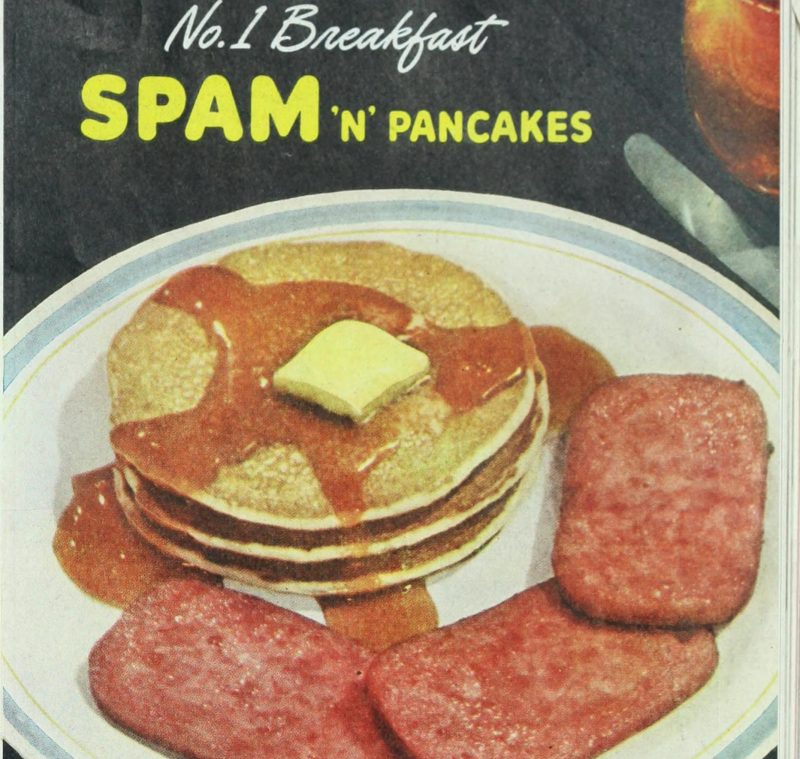
The name Spam came from a contest. A New York actor named Ken Daigneau, the brother of a Hormel vice president, won $100 for suggesting it. The name is usually explained as a blend of "spiced ham," and Daigneau later said he thought of the name before there was even a product to put it on.

How Did Spam Help Win World War II?
Spam became a household name during World War II. Allied soldiers ate more than 100 million pounds of it, and after the war civilians across Europe and Asia ate it too. Future Soviet leader Nikita Khrushchev even credited Spam with keeping the Russian army fed. Not every soldier loved it, and plenty of letters from servicemen tired of Spam at every meal still sit in Hormel's archives.
Hormel shipped Spam overseas by the boatload. At the height of the war, the company sent up to 15 million cans of meat a week overseas, most of it Spam, and by early 1945 about 65 percent of Hormel's products were going to U.S. troops in Europe and the Pacific. These figures come from Hormel.
Spam also helped feed wartime Britain. The United States sent Spam and powdered eggs across the Atlantic under the Lend-Lease program, at a time when British families lived on strict rations. Spam stretched those thin meals, and in Britain it picked up the nickname "Supply Processed American Meat".
Even the empty Spam cans went to war. Flattened cans were soldered onto bomber wings and fuselages to patch bullet holes, and others were reshaped into cookware for the troops.
Soldiers ate so much Spam that plenty of them swore off it after coming home. Dwight D. Eisenhower later wrote to Hormel that he had eaten his share of Spam along with millions of other soldiers, and he jokingly forgave the company for its only sin: sending them so much of it.
Spam was a perfect wartime food because it lasted for ages without a refrigerator. It also traveled well to the Pacific, where U.S. troops helped spread a taste for it in Hawaii, Guam, and the Philippines. Those places still love it today.
Why Is Spam So Popular in Hawaii?
Spam is practically a local food in Hawaii, where it arrived with the military during World War II and never left. Hawaii residents eat nearly 7 million cans of Spam products every year, and Guam may love it even more. These numbers come from Hormel.
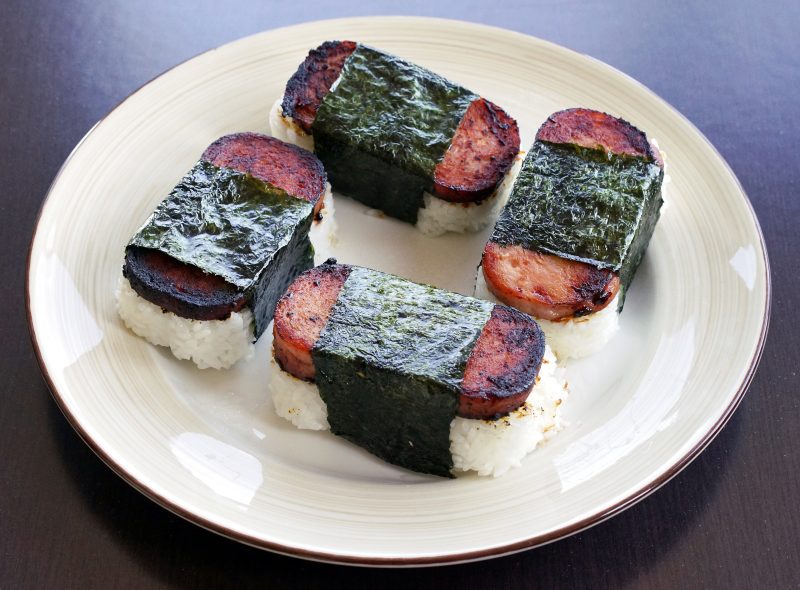
Spam musubi is the most famous way to eat Spam in Hawaii. A slice of grilled Spam sits on a block of rice and is wrapped in seaweed, a little like sushi. Hormel even makes a version with Portuguese sausage seasoning just for the Hawaii market. Spam and eggs over rice is a classic breakfast in the islands, too.
How Did Spam Become a Korean Favorite?
South Korea is the second-largest consumer of Spam in the world. Spam came to Korea with American troops, and it caught on in the hungry years after the Korean War, when food was scarce.
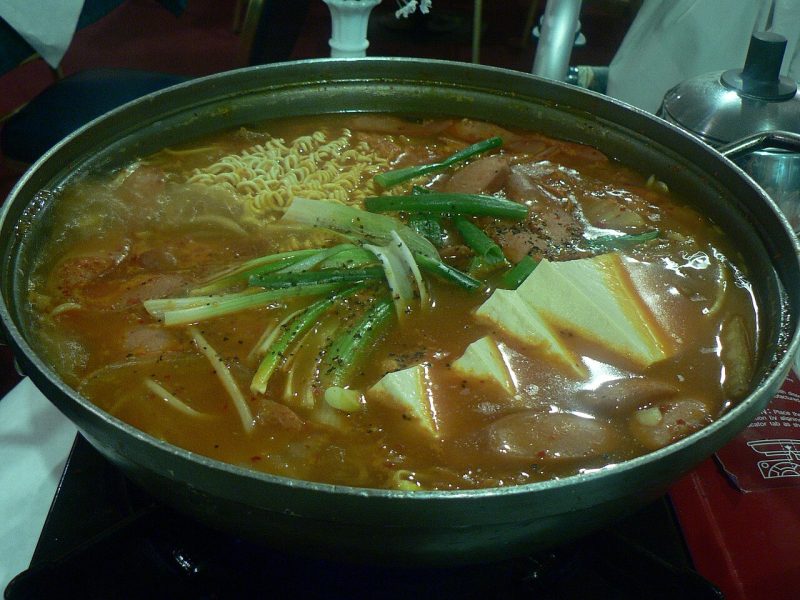
Budae jjigae, or "army base stew," grew out of those hungry postwar years. People near U.S. bases turned surplus Spam, hot dogs, and ham into a spicy stew, and a base cook named Heo Gi-suk is said to have been the first to make it with anchovy broth. Most versions today include Spam, hot dogs, kimchi, noodles, and chili paste, and some add a slice of American cheese on top.
Spam Enters Pop Culture
Spam has a long career in comedy. In a famous Monty Python's Flying Circus sketch, every dish in a cafe comes with Spam whether the diner wants it or not. That sketch is where junk email got its name, and the Python crew later spun Spam into the title of their 2005 musical Spamalot.
Spam even has its own song. "Weird Al" Yankovic turned R.E.M.'s "Stand" into a parody called "Spam" on his 1989 UHF soundtrack album.
Spam's pop culture fame has grown right alongside its sales, which climbed from one billion cans in 1959 to eight billion by 2012. This timeline shows the big moments in Spam history.
- 1937Hormel launches Spam in Austin, Minnesota
- World War IIAllied troops eat more than 100 million pounds
- 1959Hormel sells its billionth can
- 1991Hormel opens a Spam museum at its headquarters
- 2005Monty Python's Spamalot musical debuts
- 2012sales pass 8 billion cans
Try Spam the Hawaii Way
Spam has come a long way from a Depression-era lunch meat. It fed armies, inspired a comedy sketch and a musical, and became a true comfort food in Hawaii, Guam, the Philippines, and Korea. Grab a can, slice it thin, fry it until the edges crisp, and serve it with eggs and rice. You will see why so many people love it.
For more food history, read about the graham cracker's forgotten health food past, what is really inside canned pumpkin, and why Del Monte is still on store shelves.
Header photo of Spam cans by Diwei Zhu on Unsplash, 1948 Spam ad via the Internet Archive (public domain), Spam Museum exterior photo by Myotus (CC BY-SA 4.0), Spam musubi photo by Dllu (CC BY-SA 4.0), and budae jjigae photo by stuart_spivack (CC BY-SA 2.0), the rest via Wikimedia Commons.