Three Sisters Garden: How to Grow Corn, Beans, and Squash Together
Learn the Three Sisters method of growing corn, beans, and squash together: where it comes from, how the plants help each other, and how to plant a mound.

Corn, beans, and squash are some of the most rewarding crops you can grow, and for centuries Indigenous growers in North America have planted them together in one mound. The method is called the Three Sisters, and it is a smart way to grow more in a small space. Here is where the tradition comes from, how the three plants help each other, and how to plant your own mound step by step.
What Is a Three Sisters Garden?
A Three Sisters garden is corn, beans, and squash planted together in a shared space, usually in mounds or hills. The U.S. Department of Agriculture's National Agricultural Library, in its story on the Three Sisters of Indigenous American agriculture by Emily Marsh, describes it as a cultural and spiritual system as well as a farming method, with its own stories, ceremonies, and customs. The page cites research linking the practice to many Indigenous nations, including the Haudenosaunee (Iroquois) Confederacy, the Seneca, and the Cherokee.
The National Park Service says the planting style is thought to come from the Haudenosaunee and to have spread west with the Anishinaabe (Ojibwe). Its page on the Three Sisters garden at Grand Portage National Monument notes that the Anishinaabe Oodena garden there is used as a teaching tool. The Smithsonian's Folklife Festival program on the Three Sisters is one place to learn more.
How Do the Three Sisters Help Each Other?
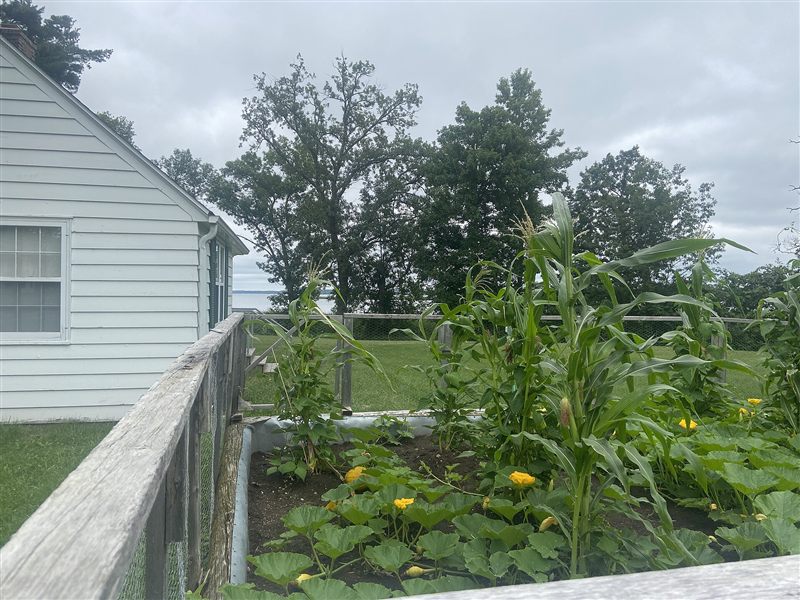
Each of the three plants has a job. The National Park Service's Grand Portage page explains that corn uses a lot of nitrogen, that beans planted around the corn add nitrogen to the soil, that the beans climb the corn stalks, which act as a trellis, and that squash grows between the mounds, shading the soil, which helps hold moisture and limits weeds. The National Agricultural Library story adds that beans host bacteria on their roots that fix nitrogen.
There is one practical catch. The Cornell Cooperative Extension Warren County Master Gardener article, Creating a Three Sisters Garden, by Sandy Vanno, notes that corn is a heavy nitrogen feeder and needs side-dressing with fertilizer, because in the first year most of the nitrogen the beans fix is not yet available to the corn and squash. Give your corn a little extra feeding and the mound will do the rest.
How Do You Plant a Three Sisters Mound?
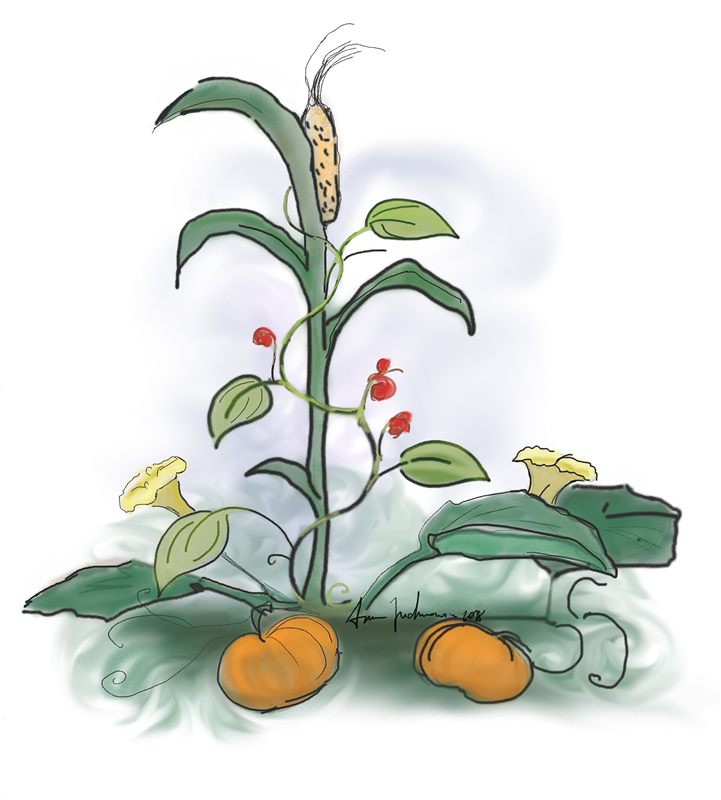
You plant a Three Sisters mound in stages, with the corn going in first. The Cornell Warren County guide recommends a mound about 12 inches high and 18 inches to 3 feet across, planted in late spring after the danger of frost has passed. It says to plant the corn once nighttime temperatures reach the 50-degree range, and no later than June.
- Build the moundabout 12 inches high and 18 inches to 3 feet across
- Plant the corn first4 to 7 soaked seeds, about 6 inches apart in the center, thinned to 3 or 4
- Add the beanswhen the corn is at least 6 inches tall, 6 pole bean seeds in a circle about 6 inches from the corn, thinned to 3 or 4
- Add the squash4 seeds about a foot from the beans, thinned to 1 plant
- In a dry areaflatten the top of the mound and make a shallow dip to hold water
Which Varieties Work Best?
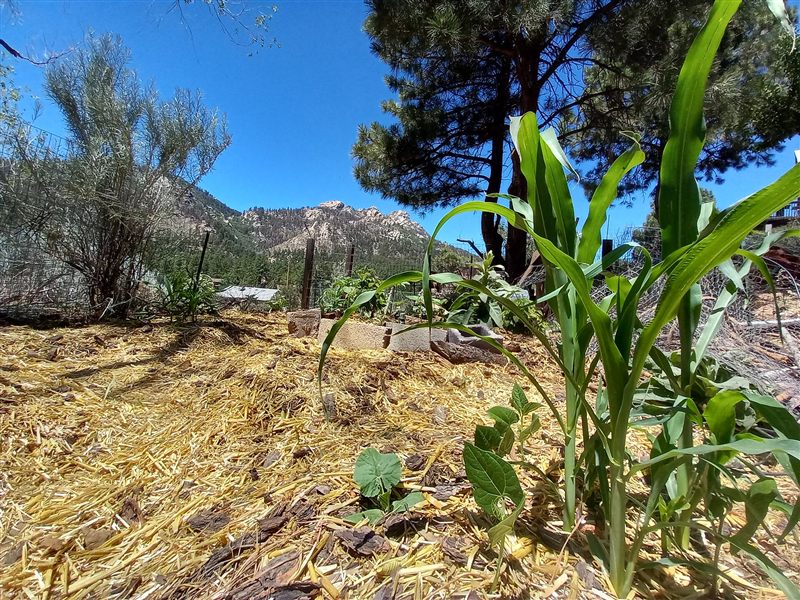
Choose pole beans, because bush beans will not climb the corn. The Cornell Warren County guide recommends Genuine Cornfield or Scarlet Runner beans, Connecticut Field or Small Sugar pumpkins, and dent, flint, or flour corn. If you are curious why a small sugar pumpkin is different from the big orange kind, read why canned pumpkin is not the pumpkin you picture.
The National Park Service's Grand Portage page adds that sunflowers are planted in that garden to distract birds and provide another food source. For more beginner-friendly crops to plant nearby, see our guide to the easiest vegetables to grow at home.
A Garden That Feeds You and Teaches Something
A Three Sisters garden is more than a clever way to use space. It is a living tradition from Indigenous growers, and it rewards you with corn, beans, and squash from one mound. Start with a single mound, give the corn a head start, and you will see why the three plants have grown together for so many generations.
Header photo of corn and squash growing together in Michoacán, Mexico, by Feria de Productores (CC BY 2.0, cropped), museum garden photo by Myotus (CC BY-SA 4.0), illustration by Anna Juchnowicz (CC BY-SA 4.0), and Arizona mound photo by Spencer-Nägy (CC BY-SA 4.0), all via Wikimedia Commons.